
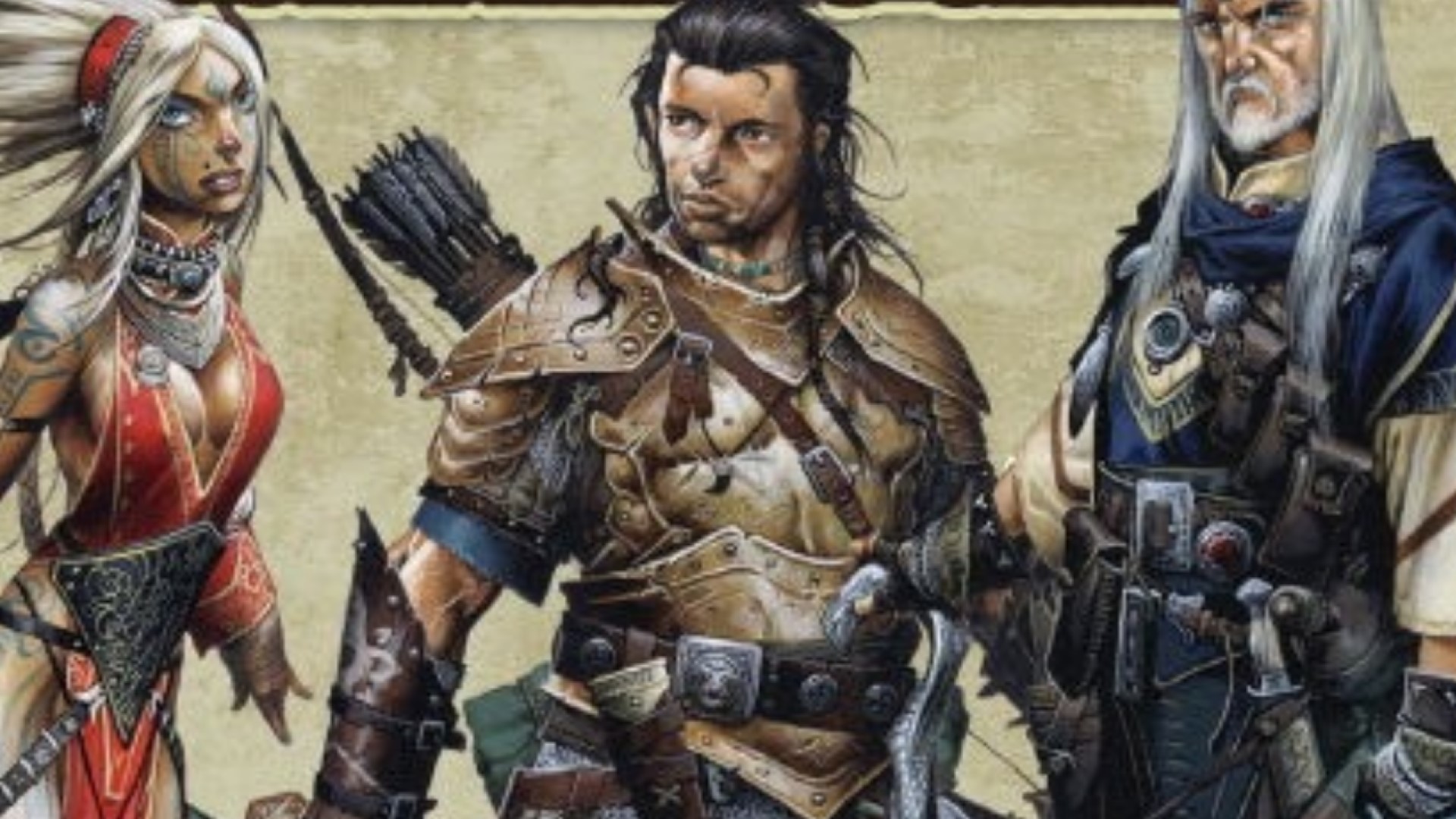
So you want to play a Fighter Pathfinder 2e — good choice. In a game packed with spellcasters juggling dozens of abilities, the Fighter stands tall as the most reliable, satisfying, and secretly complex martial class in the entire system. No spell slots to track, no daily resources to manage. Just you, a weapon, and a deep well of tactical options that most players never fully explore.
In this complete build guide, we break down everything you need to know: attributes, ancestries, the best build archetypes, feat choices at every level, and pro tips that separate good Fighters from great ones. Whether you are picking up Pathfinder for the first time or returning after a long campaign, this guide has you covered.
Why the Fighter Is One of the Best Classes in Pathfinder 2e
Fighters have a reputation in tabletop RPGs for being the boring choice. Pick up sword, hit thing with sword, repeat. Pathfinder 2e completely dismantles that stereotype. The Fighter in this system is a precision instrument, not a blunt one.
Here is what makes the Fighter genuinely exceptional:
- Weapon proficiency one full tier above every other class. This means more accurate attacks and far more frequent critical hits. Over a long campaign, this difference adds up to an enormous amount of extra damage.
- Free Advanced weapon proficiency. Other classes need to spend a feat to use Advanced weapons without penalty. Fighters get it automatically.
- Reactive Strike at level 1 — for free. This ability punishes enemies who try to run past you or cast spells in your reach. Almost no creature in Pathfinder 2e can do this without spending a feat.
- No subclass required. Fighters do not have a subclass system, which means your build identity comes entirely from your feat choices. This creates incredible customization depth.
The Fighter’s main role is Defender and Striker, but with smart feat selections, a Fighter can control the battlefield, debuff enemies, support allies, and handle ranged encounters with equal effectiveness.
Understanding Fighter Attributes: Strength vs Dexterity
The most important decision you will make when building a Fighter is choosing between Strength and Dexterity as your key attribute. This one choice shapes your armor, your playstyle, and which feats make sense for your character. Do not rush it.
The Strength-Based Fighter
A Strength-based Fighter hits hard and soaks up punishment. Full Plate armor — the best defensive option in the game — has a Dexterity cap of +0, which means once you put it on, your DEX modifier stops contributing to your Armor Class entirely. The Bulwark trait on Full Plate actually replaces your DEX modifier in the formula, so building up Dexterity is wasted investment for this style.
This is the right path if you want to stand in the front line, absorb hits for your party, and deal reliable, heavy damage every single turn.
The Dexterity-Based Fighter
A Dexterity-based Fighter sacrifices some raw damage for versatility and mobility. With lighter armor, you can more easily switch between melee and ranged combat. Your initiative rolls improve, which means you often act before enemies. This build works especially well as an Archer or a Dual-Wielder who relies on speed over brute force.
Other Attributes Worth Investing In
Beyond your key attribute, prioritize Constitution above everything else. As a frontline fighter, you will absorb the most enemy attacks in any given combat. Constitution gives you more hit points per level and strengthens your Fortitude saves, which are your defense against some of the most dangerous effects in the game — poison, disease, and petrification among them.
Wisdom is useful for Will saves and prevents the Fighter from being easily confused or frightened. Intelligence can be worth a point or two if you want more trained skills, but dumping it to 8 still leaves you with enough skills to function well outside of combat.
The 4 Best Fighter Build Types in Pathfinder 2e
Every Fighter build in Pathfinder 2e works. But some builds are better suited to specific tables, party compositions, and playstyles than others. Here are the four most effective options:
1. Sword and Shield Fighter (Best for Beginners)
This is the classic, reliable frontliner. You wield a one-handed weapon and a shield. The free Shield Block feat means you can actively reduce incoming damage as a Reaction, turning the Fighter into an almost absurdly durable tank. This build is the easiest to learn, performs well at every level, and requires the least optimization pressure. If you are new to Pathfinder, start here.
2. Two-Handed Striker (Best for Maximum Damage)
Two-handed weapons — greatswords, greataxes, halberds — deal the highest base damage in the game. A Strength-based Fighter with a two-handed weapon and the right feats can output terrifying numbers, especially once critical hits start landing. You are less defensive without a shield, but your job is to end fights before they get complicated. This build rewards aggressive play.
3. Dual-Wielder (Best for Advanced Players)
Dual-wielding in Pathfinder 2e is not automatically good — it requires specific feats to offset the multiple attack penalty. But when built correctly, a Dual-Wielder unleashes relentless flurries of attacks that can overwhelm even the toughest enemies. This build has the highest mechanical skill ceiling and rewards players who understand action economy deeply.
4. Archer (Best for Ranged Tactics)
Ranged Fighters are underrated. An Archer stays out of the most dangerous melee range, applies consistent pressure across every round, and pairs beautifully with a melee tank who holds the front line. Dexterity is your key attribute here. Feats like Double Shot let you make two ranged attacks at only a -2 penalty each — a significant improvement over the normal -5 multiple attack penalty.
Best Ancestry Choices for the Fighter
Ancestry in Pathfinder 2e is roughly equivalent to race in other tabletop games. Your ancestry gives you stat boosts, unique heritage traits, and ancestry feats that grow in power over time. For a Fighter, the best ancestries are the ones that amplify combat durability or give you extra feats to work with.
Human — Best Overall Pick
Because Fighters are almost entirely defined by their feats, starting with a bonus feat at character creation is a massive head start. Humans offer exactly that. Any Fighter build benefits from an extra feat at level one. The flexibility also means you can plug in almost any background without worrying about mismatched stat boosts.
Dwarf — Best for Tanky Fighters
Dwarves get excellent stat bonuses and natural synergy with dwarven weapons, which deal bonus damage against certain enemy types. They are stocky, tough, and designed for prolonged melee combat. If you are building a Sword-and-Shield Fighter, the Dwarf ancestry is thematically and mechanically perfect.
Orc — Best for Pure Aggression
Orcs get a natural Strength boost and Darkvision, both useful for a melee Fighter. More importantly, Orc Ferocity lets you survive a killing blow once per day by spending your Reaction — you drop to 1 HP instead of dying. The Hold-Scarred Orc heritage pushes your dying threshold to dying 5 instead of 4, giving you a meaningful extra buffer before death. For a character who actively draws enemy attention, this resilience is hard to overvalue.
Essential Fighter Feats, Level by Level
No other class in Pathfinder 2e is more defined by their feats than the Fighter. Your combat identity, your damage output, your tactical options — all of it flows from the feats you choose. Here is a level-by-level breakdown of the most impactful options:
Level 1 — Free Class Feats
- Reactive Strike: Punishes enemies who move through your reach or cast spells next to you. You are the only class that gets this without a feat investment. Never ignore it.
- Shield Block: Also free. Lets you reduce incoming damage using your shield as a Reaction. Even if you do not use a shield every fight, having the option available costs you nothing.
Level 1 — General Feats to Consider
- Incredible Initiative: A bonus to your Initiative roll means you act before more enemies, more often. Extra actions at the start of combat win fights.
- Toughness or Diehard: Both keep you alive longer. Toughness gives you more HP and reduces your recovery check DC. Diehard makes it harder to kill you once you are downed. Either is a solid pick for a frontliner.
- Battle Medicine: If your party lacks a dedicated healer, the ability to stabilize allies without magic is worth training Medicine for.
Level 2 — First Fighter Feat Choice
- Intimidating Strike: Strike and Frighten an enemy in the same action. Frightened enemies take penalties to all their rolls, helping every member of your party — including casters — land their abilities more reliably.
- Aggressive Block: When you successfully use Shield Block, you can push the enemy away or knock them prone. Great for Sword-and-Shield builds.
Level 4
- Knockdown: Trip an enemy as part of your Strike. Prone enemies are dramatically easier to hit, especially for ranged allies who get a bonus against prone targets in melee range.
- Twin Parry: For Dual-Wielders specifically, this gives you a bonus to Armor Class when wielding two weapons. Addresses the main defensive weakness of that build.
Level 5 — Fighter Weapon Mastery (Class Feature)
This is a class feature, not a feat, but it defines your entire build. At level 5, you choose one weapon group — Swords, Axes, Bows, Brawling, and so on — and your proficiency with every weapon in that group jumps significantly ahead of your other weapon proficiencies. Plan your entire build around this moment. Your weapon choice at level 1 should already anticipate what group you will master at level 5.
Level 6 and Beyond
- Double Shot (Archer builds): Two ranged attacks at -2 each instead of the standard -5 multiple attack penalty. A consistent, significant damage upgrade.
- Rebounding Toss (Thrown weapon builds): Hit two targets with a single thrown weapon. Works best when two enemies are within 10 feet of each other.
- Improved Knockdown: The upgraded version of Knockdown, which does not require the enemy to pass a saving throw. Reliable crowd control on demand.
Pro Tips That Most Fighter Guides Skip
After hundreds of hours with the system, here are the less-obvious lessons that separate average Fighters from exceptional ones:
- Use retraining aggressively. Because Fighters are defined so heavily by feats, and because feats interact with specific weapons, your build should evolve as you find new magic items. When you pick up a powerful magical bow mid-campaign, retrain your melee feats into archery feats. This is not cheating — it is playing the class correctly.
- Lock in your attributes early. Unlike feats, your attributes are very difficult to change. The choice between Strength and Dexterity as your key attribute needs to be made at character creation and committed to. Do not expect to change direction at level 10.
- Frightened is one of the best conditions in the game. Any feat that inflicts Frightened — Intimidating Strike, Scare to Death, Terrifying Resistance — is helping your entire party. Frightened enemies take a penalty to all their attack rolls, saving throws, skill checks, and ability checks. One Frightened condition can be the difference between a spell landing or failing.
- Do not sleep on utility feats. The Fighter can feel weak outside of combat. Feats like Battle Medicine, Intimidation skills, and Archetypes open up enormous utility. If you want your Fighter to matter outside of a fight, invest in at least one non-combat direction.
- Position matters more than raw damage. A Fighter who uses Reactive Strike to lock down key enemies gives the whole party a free action every round. A Fighter who just maximizes their own damage ignores one of the best contributions the class can make to a team.
Conclusion:
The Fighter in Pathfinder 2e is not the flashy choice. It does not throw fireballs or transform into animals. What it does is fight — with a precision and reliability that no other class in the system can match. If you want a character who is always useful, always capable, and always terrifying in combat, the Fighter delivers that every single session.
The depth is there when you want it. The simplicity is there when you need it. That balance is what makes the Fighter one of the most enduring, satisfying classes in Pathfinder 2e — and why, after all these years, it still fills the front line of adventuring parties across every table. Now go roll those dice — and don’t forget to retrain if you find a better weapon
